


Intimate surgery

Vulvar gap surgery

Symptoms: sensation of being opened up, vaginal air noises, incongruous noises during intercourse, fluid discharge, reduced vulvo-vaginal sensation, partner recrimination.

Vulvar hollowness is most often secondary to one or more deliveries.

Despite the large number of patients affected, there are few open complaints, as it's still a taboo subject.

This is a lack of tone in the perineal muscles, leading to a relaxation of the vulval fork and an increase in vaginal capacity.

The problem is not anatomical but functional: some women complain of vaginal gas emission during intercourse (vaginal farts), and a mechanical reduction in sexual pleasure, also felt by the partner.

Vulvar hollowness can also cause vaginal discharge of fluid after a bath (pool sign).
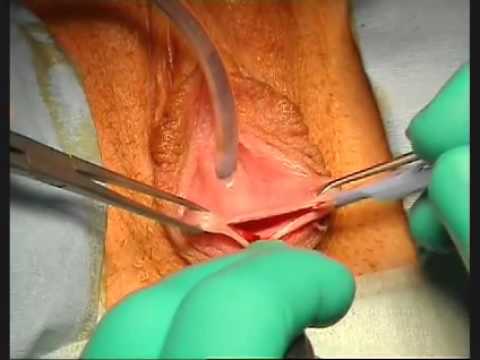
Treatment is primarily preventive, with post-partum perineal rehabilitation.

This re-education can be repeated with a physiotherapist or specialized midwife.

The action is limited to better control of muscle contraction, but will not replace a damaged muscle.

Rehabilitation can be performed in the absence of an anatomical defect, and as a complement to surgery.

However, reconstructive surgery may be indicated.

The aim is to strengthen the muscles and narrow the vaginal orifice.

Three types of surgery can be performed on an outpatient basis: perineoplasty, vaginal lift or vaginoplasty.

These methods can be complemented by vaginal shrinkage using injections of autologous fat (obtained by liposuction from the patient and reinjection) and/or hyaluronic acid.

It is also possible to reduce the vaginal surface by laser or surgical resection of the vaginal excess.

These surgical methods are effective today, but while the anatomical results are good, the improvement in sexual quality of life is more uncertain.

It is therefore important to carefully select the indications and to reserve these techniques for patients who are very inconvenienced after medical techniques have failed.

Fat reinjection

In aesthetics, fat reinjection or cellulo-adipous tissue grafting is used for vaginal and vulvar rejuvenation, correcting vulvar hollowness, plumping the labia majora or narrowing the vaginal orifice.

From a functional point of view, fat reinjection can correct a number of pathologies, such as certain types of pain during intercourse (dyspareunia) and vaginal dryness.

In particular, it is revolutionary in the treatment of obstetrical and surgical trauma: painful and/or unsightly episiotomy or tear scars.

It's even possible to correct a vulvar gap that causes discomfort, vaginal gas or a feeling of laxity during intercourse.

Reduction nymphoplasty

Reduction nymphoplasty or labia minora reduction plasty is indicated for patients with real or perceived labia minora hypertrophy.

Patients express aesthetic and physical discomfort, accentuated by changes in fashion (very tight jeans, thongs, etc.).

This is an isolated malformation of the labia minora, appearing highly developed and causing both an unsightly appearance and functional discomfort in daily life, sports and sexual activities.

The complaint most often appears during adolescence (sports) or when sexual activity begins, but can also occur after childbirth.

These patients can experience a real complex, sometimes since adolescence.

There are 2 possible scenarios:

  1. True hypertrophy of the labia minora, which requires reconstructive surgery. This hypertrophy and its impact on daily life must be objectively assessed by the surgeon.
  2. Perceived« hypertrophy, or asymmetry, in which there is no hypertrophy in the medical sense of the term, but the patient describes aesthetic and/or functional discomfort.

The surgical technique consists of removing the excess tissue to symmetrically reduce the size of the labia minora.

The ideal technique is a V or Lambda plasty, which has the advantage of preserving the natural border of the labia minora with an almost invisible scar.

The procedure is performed on an outpatient basis, under a short general anaesthetic.

Care philosophy

A holistic approach to women's health

Dr Nadia Oukacha puts her expertise in gynecology, obstetrics and fertility at the service of every woman, combining listening, prevention and cutting-edge technology.

Active listening and caring

Each consultation begins with an in-depth discussion to understand your needs and establish a climate of trust.

Comprehensive, personalized approach

A complete check-up, nutritional advice and psychological follow-up are adapted to your age and life situation.

Focus on prevention

Regular smear tests, screening and check-ups aim to anticipate risks and preserve your health over the long term.

Frequently asked questions (FAQ)

Here you'll find answers to the most frequently asked questions about consultations, specialties, booking appointments and how the practice works.

How do I make an appointment with Dr Oukacha?

You can book your consultation directly online via our website or by calling the practice on +212 606 12 12 13. A contact form is also available on the site.

What are Dr Nadia Oukacha's specialties?

Dr Oukacha specializes in :

  • Gynecology (consultations, pap smears, colposcopy, ultrasounds)

  • Obstetrics (pregnancy monitoring, ultrasound, amniocentesis)

  • Intimate and breast surgery

  • Fertility and medically assisted reproduction (MAP)

What examinations are carried out at the clinic?

The practice is equipped for :

  • Gynecological and obstetrical ultrasounds

  • Cervico-vaginal smear

  • Colposcopy

  • Fertility assessment

What are the opening hours?

  • Monday to Friday: 9:00 am - 5:00 pm

  • Saturday: 9:00 am - 1:00 pm

  • Sundays and public holidays: closed

Where is the office located?

The office is located in Casablanca, at 125 BD Brahim Roudani, 1st floor, Appt 11. An interactive map is available on the Contact page.

Book your consultation

Access specialized gynecology, obstetrics and fertility care with confidence and simplicity.